Not just for history: interdisciplinary teaching and learning in Special Collections
Published
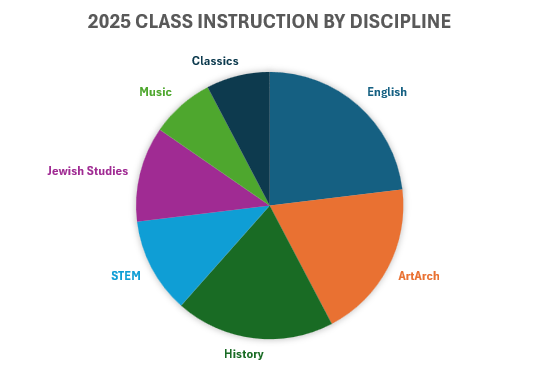
Tulane University Special Collections (TUSC) is an integral partner in teaching and learning on campus, providing students and faculty with direct access to rare books, archival materials, and primary-source documents that enrich academic inquiry. TUSC’s instructional sessions support faculty across disciplines and help students develop deeper engagement with course content through hands-on interaction with historical materials. While disciplines such as English, History, Art History, and Studio Arts remain TUSC’s primary users, there has been an increasing engagement from STEM fields as faculty and students discover the value of working directly with archival materials to deepen scientific and interdisciplinary thinking.
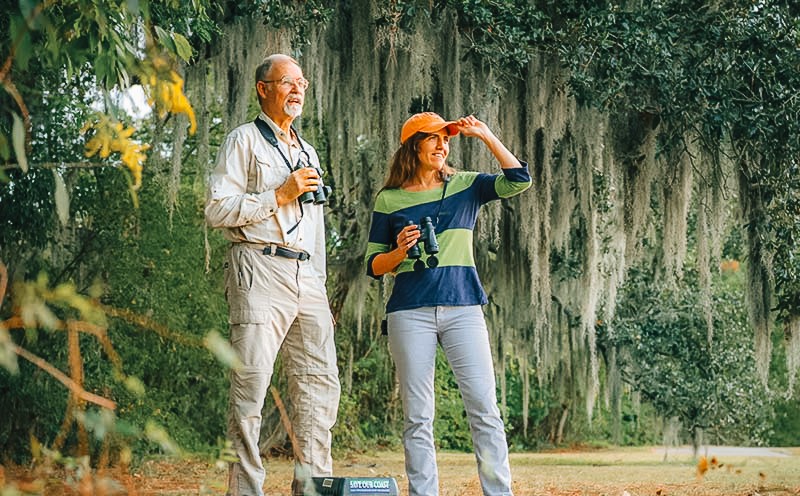
In Spring 2024, Special Collections collaborated closely with Dr. Donata Henry, Senior Professor of Practice in Ecology and Evolutionary Biology at Tulane University’s School of Science and Engineering, to design a primary source instruction session for her EBIO4200 Ornithology course. During a 4-hour lab period, students explored early modern natural history books from the Koch Collection of Botanical Literature; rare field guides; zines; contemporary artists' books; and manuscript materials related to ornithology and botany, including field notes, early scientific illustrations, and works documenting the history of bird study in the region. For many students, this was their first encounter with historical scientific sources, and the session encouraged them to think critically and historically about how knowledge about the natural world is collected, recorded, and interpreted over time.
Since 2019, Dr. Henry has integrated Special Collections into her teaching as an additional class period or laboratory for experiential learning. During the visits to Special Collections, students’ encounters with rare and archival materials serve as an opportunity to further practice techniques for systematic, detailed recording of observations as they happen. Instead of closely observing flora or fauna in the field, students turn their attention to rare books and the representations of species contained within them at the library. In this way, they can appreciate the documentation and representation of biodiversity across centuries and around the world. Dr. Henry reflected,
“I am grateful for the resources and opportunities provided by the special collections. Our class trips are a highlight of every semester; my students are always amazed by the discoveries they make, and on every visit, I myself learn something new. The collections are an invaluable enrichment to our teaching and learning at Tulane.”
In Henry’s courses that visit Special Collections, students produce zines, document observations in field journals, and engage in critical discussions about the historical evolution of scientific observation and writing. Through direct engagement with historical materials, students strengthen their descriptive and analytical skills while reflecting on and gaining a deeper appreciation for science as an ongoing and inherently imperfect endeavor.
The impacts of such collaborations often extend beyond the classroom. Inspired by these class visits, Emma Le Bihan, a senior majoring in Ecology and Evolutionary Biology (class of 2025), returned to Tulane University Special Collections to pursue independent research for her honors thesis. She focused on the Henry Hazlitt Kopman papers, a small but significant set of field journals documenting bird observation trips conducted for Audubon societies by Kopman across Louisiana, Mississippi, and Florida in the late nineteenth and early twentieth centuries. Kopman’s journals represent our earliest systematic records of the birds of New Orleans and other locations on the Gulf Coast.
Over the course of summer and fall 2024, Emma worked closely with Special Collections archivists and librarians to gather data and contextual materials that would support her research. She visited the TUSC reading room regularly to extract migration data from Kopman’s field notes and bird-migration records, analyzing these observations to trace shifts in migration patterns for five bird species. The significance of this work, Emma explains, extended well beyond the project itself:
“Working with the Tulane Special Collections was a really unique experience, and it opened my eyes to the importance of natural history. I now carry that knowledge with me when I conduct research for my master's in Conservation Biology at Lund University. Understanding the long-term patterns of species is a very important part of conservation, and historical records can help us fill in our knowledge gaps.”
In April 2025, Emma successfully defended her honors thesis, “Over a Century of Change in Louisiana Bird Biodiversity,” and is now pursuing master’s degree in Conservation Biology at Lund University, Sweden.
Throughout the process, rare book curator and head of research services, Agnieszka Czeblakow, provided research guidance, helped Emma contextualize the historical records, and ultimately, was invited by Dr. Henry to serve as the third reader on Emma’s thesis.
“It was an honor to be included and have the opportunity to see the student’s progress and intellectual growth from that first visit to special collections, through the research and writing process, to the day of the thesis defense,” says Czeblakow, of her experience. “It is an absolute joy to work alongside faculty who recognize archivists and librarians as partners and collaborators in teaching and learning, and who understand the educational potential of Tulane's rare book and archival collections.”
For more information:
about how classes can collaborate with Tulane University Special Collections, contact specialcollections@tulane.edu, and learn more about our program via the TUSC website.