Philosophy Through Play: Tulane Professor Brings Interactive Art to the Library
Published
Written by Becky Gipson
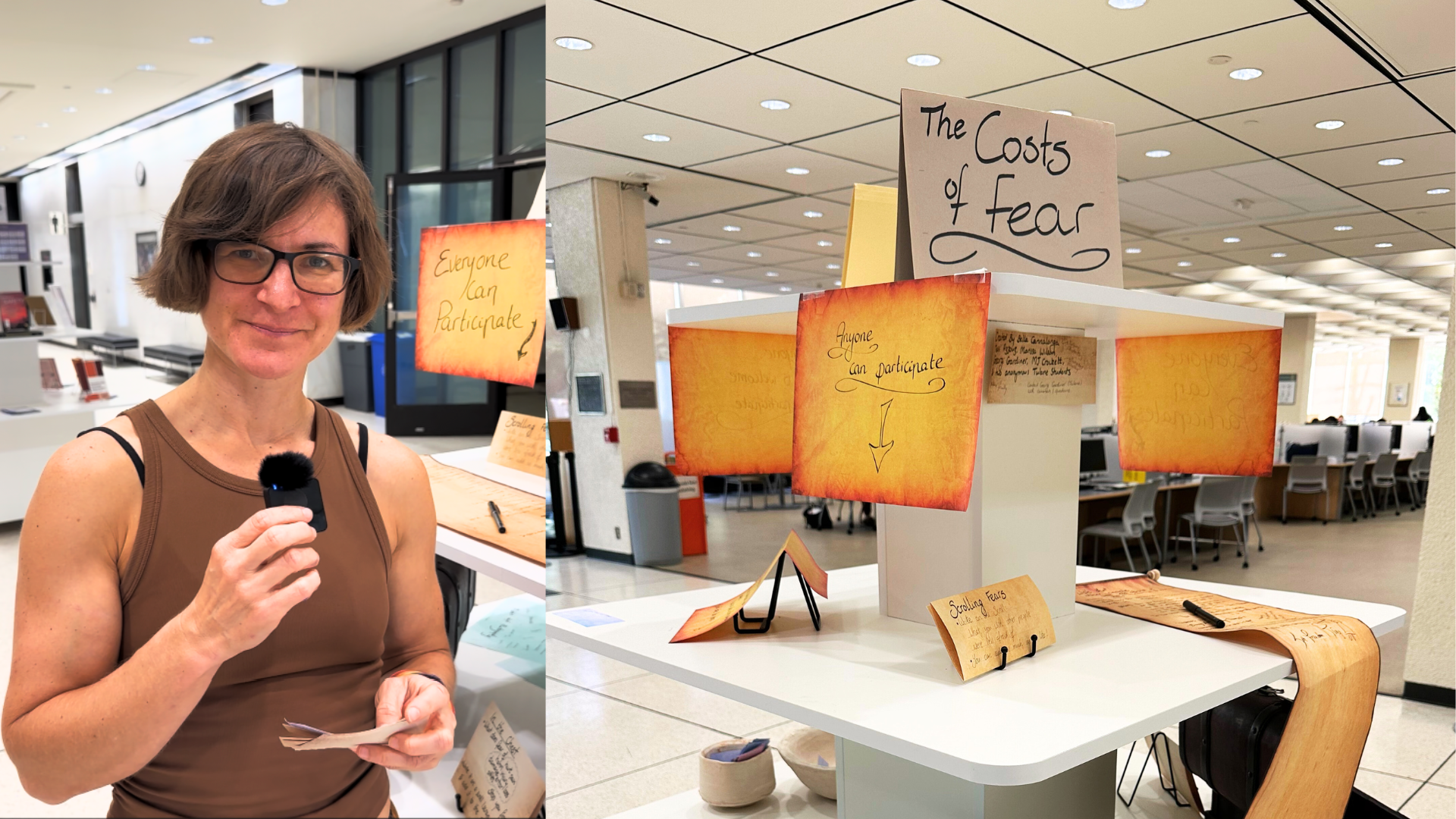
When Georgi Gardiner walks through Howard-Tilton Memorial Library, she doesn't just see a repository of books; she sees a canvas for questions, a stage for wonder, and a space where scholarship can unfold through creativity and play.
Gardiner, an associate professor of Philosophy with a dual appointment in Gender and Sexuality Studies at Tulane University, is transforming the library into a philosophical art space where interactive installations invite students, faculty, and visitors to engage with ideas in unexpected ways.
The Cost of Fear
Her first exhibition, "The Cost of Fear," emerged from a collaborative moment with her students. At its heart sits the "Bowl of Fear" — actually two ceramic bowls on loan from Tulane's Art Department. The concept is elegantly simple yet profound: visitors place fears of being judged or mistreated by others into Bowl A. Anyone else can then move these fears to Bowl B, signaling "you don't need these fears."
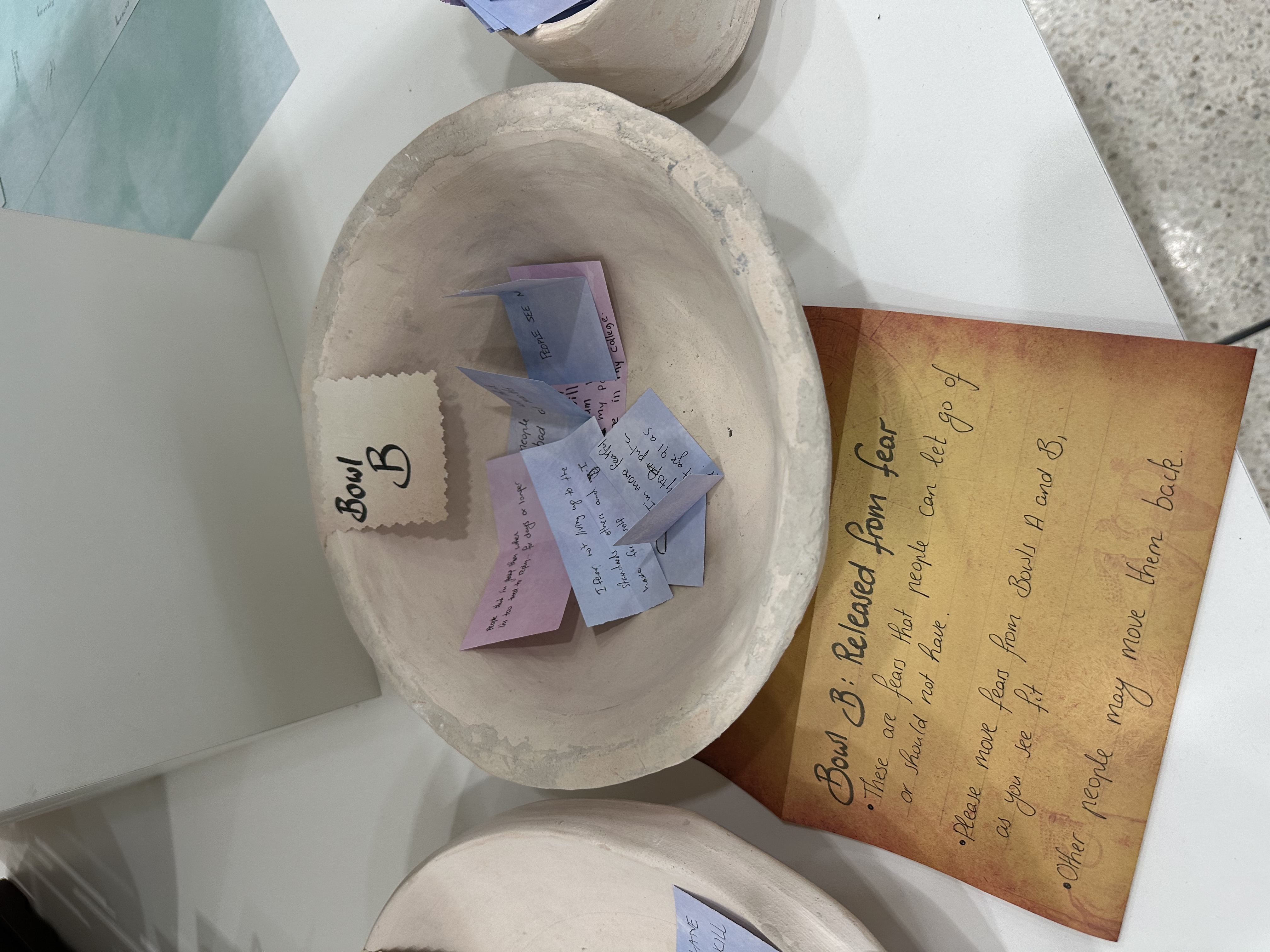
"It was the most incredible kind of 'yes and' sequence," Gardner recalls of how her students developed the idea. "They sort of had an idea, and the next one built on it, and the next one built on it, and then another one created the bowls. It just was this amazing, emergent teamwork idea."
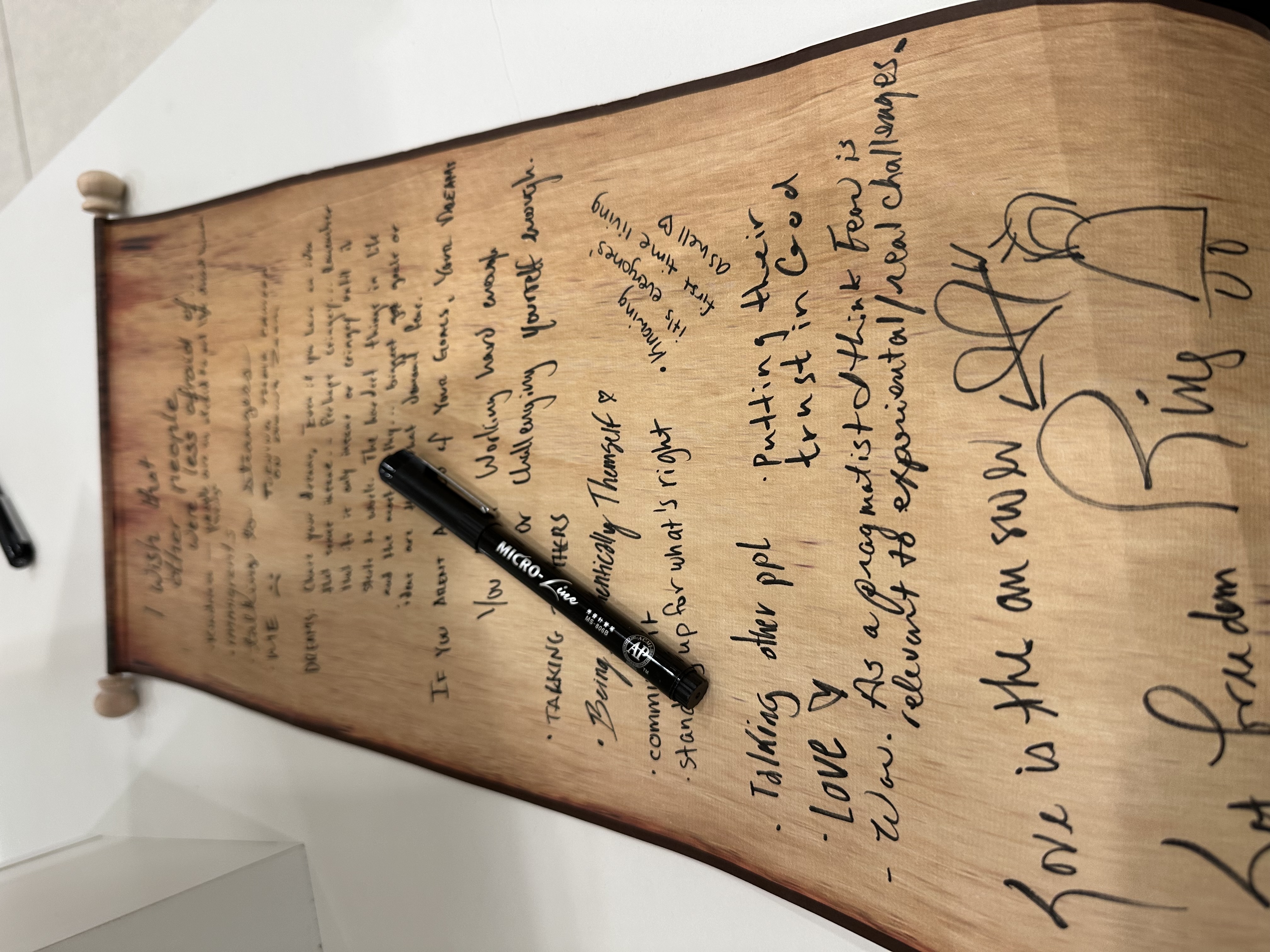
The installation extends beyond the bowls. A chest asks: What does fear of harm, hurt, or error stop you from doing? A scroll poses the question: What do you wish other people were less afraid of? Another prompt invites reflection on what activities people would pursue if they weren't afraid of being bad at them.
Responses that Resonate
The submissions have been revealing. Gardiner was particularly moved by one entry in the chest: "Loving my friends in the way that they deserve." Another powerful contribution to the bowls read: "People won't think I care about them or their lives because of my memory issues from ADHD and COVID brain fog."
"That's a fear I have never in my life heard expressed before," Gardiner reflects. "It's a really profound fear, a really unfortunate circumstance."
When asked what people would do more if fear didn't hold them back, dancing emerged as the overwhelming theme. The pattern struck Gardiner as significant, revealing how society has transformed creative arts into competitive, assessed activities rather than sources of joy.
"This is one of the reasons I love second lines," she says, referencing New Orleans's distinctive parade tradition. "At second lines, it really makes apparent that when it comes to dancing, we can reject the question of whether it's good dancing or bad dancing. There’s just movement and joy in movement and bonding through community.”
Why Interactive Art?
For Gardiner, interactive installations aren't just creative flourishes — they're fundamental to how ideas take root. Her approach stems from a conviction that scholarship extends beyond memorizing facts to encompass questions we haven't thought to ask yet and concepts for which we don't have words.
"For me, it's all about how much time are people spending thinking about the ideas in a fresh, new way," she explains. "The participant — is not really a viewer, it's a participant — how they're interacting is the artwork."
This philosophy extends to her teaching. In one previous exhibition at the Chemical 14 Gallery in New Orleans, Gardiner collaborated with Antoine Young, Tulane's Security Administrator III, Public Safety, to create a piece where visitors looked through a peephole into a box, only to discover they were watching themselves on camera, a commentary on surveillance that existed only in their reaction.
Hermes
Gardiner's next installation in February promises to continue this collaborative spirit. "Hermes," also developing from students' philosophical artwork, is an interactive sculpture that invites participants to share their favorite words and concepts for understanding themselves, other people, and the world around them.
The installation highlights the library as a place to learn and share ideas, insight, experience, and knowledge — a fitting tribute to its namesake, the Greek messenger god associated with communication and the exchange of information.
Why the Library?
Gardiner chose the library deliberately. It represents interdisciplinarity, curiosity, and a freedom to explore beyond prescribed curricula.
For students nervous about engaging with the installations, Gardiner offers reassurance rooted in her philosophy of education: "University is a space where mistakes are particularly important. If you're not making mistakes, you're not being open or ambitious enough."
Questioning Our Fears
At its core, Gardiner's work asks us to examine the fears we carry, particularly those shaped by culture rather than genuine threat. She's especially interested in "stranger danger" and how fear of others, sometimes rooted in racism, limits our lives and communities.
"Fear is maybe a bit simplistic, but it's like a kind of hatred in some ways," she reflects. "We have to be really questioning of our fears in this regard."
"The Cost of Fear" has completed its run in Howard-Tilton Memorial Library, but "Hermes" and future installations will continue to invite the Tulane community to pause, reflect, and share the concepts that shape how we understand our world.
To learn more about the art installation, check out our YouTube video.
You may be interested in...
Now open for research at TUSC: Interviews conducted by Jeff Hannusch, Milne Boys Home ephemera, New Orleans spasm band materials, and more

New Tulane University Exhibit Explores Contested Path to Independence in Spanish America