Home / Places / Tulane University Special Collections / Louisiana Research Collection
Louisiana Research Collection
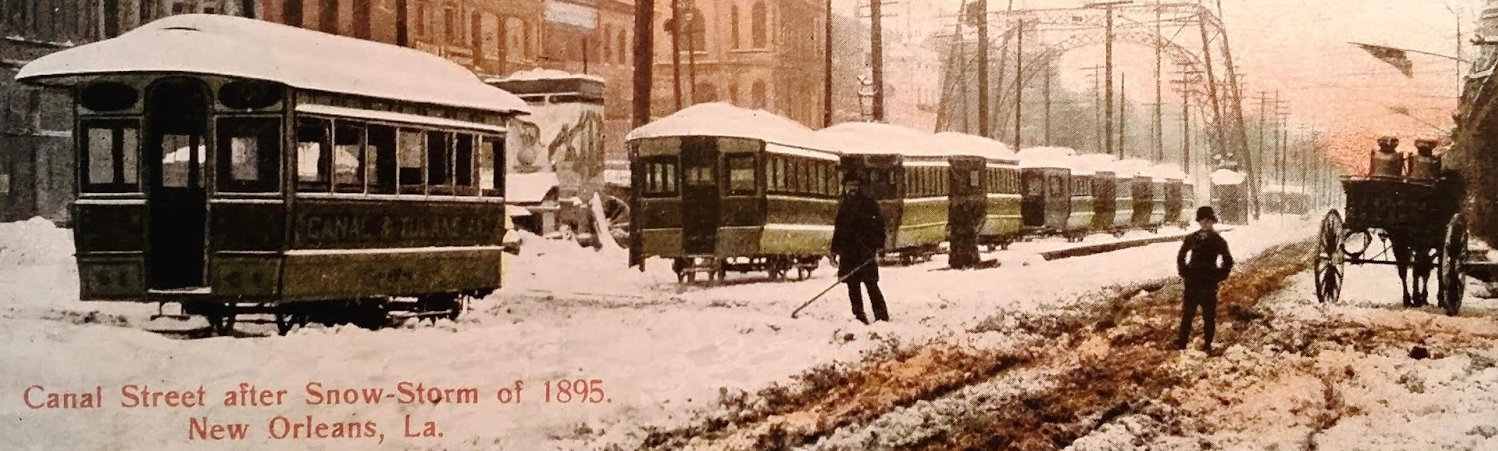
With its origins going back to 1889 and its holdings encompassing more than four linear miles of archives, books, and maps, the Louisiana Research Collection is one of the older and more comprehensive sources for the study of our city and state. Subject strengths include art, business, Carnival, the Civil War, the environment, Jewish studies, LGBTQ+ studies, medicine, politics, social welfare, literature, and women's studies.
Tulane University’s archival program began on May 3, 1889, when Marie Antoinette Eulalie Courmes Dolhonde presented to the Charles T. Howard Memorial Library a letter from Thomas Jefferson to Armand duPlantier. That donation marked the beginning of what came to be the Louisiana Research Collection (LaRC).
In 1938, the Howard Library, the Newcomb Library from Newcomb College, and Tilton Library from Tulane University merged to form Tulane’s Howard-Tilton Memorial Library (HTML). The Howard Library opened in 1889, and while privately held, functioned as the city library for New Orleans. Its holdings are largely why LaRC today preserves one of the finest 19th-century Louisiana libraries.
While the Howard Library, the Newcomb Library, the Tilton Library, and the merged Howard-Tilton Memorial Library (HTML) had all intermittently acquired Louisiana research materials, in 1956, HTML hired Consuelo “Connie” Garza Griffith as its first person specifically charged with overseeing archival and special collections. The new Special Collections department initially had three sections: Rare Books, the Manuscripts Department (for archival collections), and the Louisiana Collection (for books and other printed resources about Louisiana). Those departments were soon followed by the Hogan Jazz Archive (1958), the Tulane University Archives (1962), and the Southeastern Architectural Archive (1979).
In 2009, the Manuscripts Department and the Louisiana Collection merged to form the Louisiana Research Collection (LaRC). In the more than 135 years since its initial donation, the Louisiana Research Collection has grown to encompass almost four linear miles of archival documents, books, maps, images, ephemera, and other resources central to the study of Louisiana.
LaRC has extensive digital collections and is actively expanding its online presence. You can find all of its online resources below.
Selected noteworthy holdings
Art
LaRC preserves records of art associations such as the Art Association of New Orleans, the Fine Arts Club, and the Southern States Art League, and an extensive collection of art ephemera extending back to 1880, such as exhibit announcements and gallery invitations, and papers of prominent artists such as Angela Gregory, Sadie Irvine, Bert Myers, Arthur Silverman, Ellsworth Woodward, and papers of the Degas-Musson family. Our Joseph W. “Pops” Whitsell glass slide collection is available online.
Carnival
LaRC's Carnival Collection preserves invitations, dance cards, and other paper ephemera from more than 200 Carnival krewes going back to the founding of Carnival in New Orleans. Additionally, LaRC preserves more than 5,600 pre-WWII original float and costume designs, comprising the largest design collection from the Golden Age of Carnival, all of which are available online. Learn more about our Carnival collection here.
Civil War
LaRC preserves the papers of Jefferson Davis, Thomas J. "Stonewall" Jackson. Albert Sidney Johnston, William Preston Johnson, and other Confederate leaders. LaRC also preserves extensive letters and diaries of Louisiana Confederate soldiers and Union soldiers serving in Louisiana.
Jewish Studies
LaRC is the official archives for most area synagogues, including Chevra Thilim, Gates of Prayer, Temple Sinai, and Touro Synagogue; and for many local Jewish social welfare organizations, including the Jewish Children’s Home, Jewish Family Service, Jewish Federation, and Louisiana Federation of Temple Sisterhoods.
LGBTQ
LaRC is the official archives for the LGBTQ Community Center of New Orleans. LaRC also preserves papers of prominent activists, including Rich Magill, Skip Ward, Stewart Butler, Laurence Best and Frank Perez; the records of LGBTQ rights organizations including New Orleans PFLAG, the Inter-Faith Council for Equality, Southeastern Association of Lesbian and Gay Organizations; Gay Carnival krewe records; and Louisiana LGBTQ publications and flyers.
Maps
Beginning in 1513 and with more than 400 maps from before 1799, LaRC’s map holdings include early maps based on explorers’ reports, War of 1812 and Civil War maps, maps of vegetation zones and natural resources, parish and highway maps, and plans of New Orleans tracing the city's development since its founding in 1718. A selection of our maps is available online.
Politics
LaRC’s holdings include the papers of many elected officials, including Senators Huey P. Long and David Vitter; Members of Congress Lindy Boggs, F. Edward Hebert, and David Treen, House Majority Leader Hale Boggs, Speaker Designate Robert L. “Bob” Livingston, and Speaker of the House Newton L. “Newt” Gingrich. New Orleans Mayors Victor Schiro and “Chep” Morrison; the records of political organizations, including the League of Women Voters, and the Jefferson Democratic Association; and campaign flyers and brochures from 1860 to the present. Learn more about our campaign flyers here.
Social Welfare
Among LaRC’s extensive social welfare holdings are the archives of the Community Chest of New Orleans, the Council of Social Agencies, Clover (formerly Kingsley House), the Protestant Children’s Home, the Traveler’s Aid Society, and the Waldo Burton Home.
Southern Literature
LaRC’s holdings of Louisiana authors include the papers of Anne Rice, Roark Bradford, Catharine Brosman, Ben and Alice Burman, George Washington Cable, Charles L. Dufour, Frances Parkinson Keyes, Ruth McEnery Stuart, James Sallis, Lyle Saxon and John Kennedy Toole. The John Kennedy Toole papers are available online.
Women’s Studies
Among LaRC’s holdings are the personal papers of Bessie Margolin, Martha G. Robinson, Hilda Phelps Hammond, Ethel Hutson, Angela Gregory, as well as the records of women’s organizations such as the Quarante Club, the YWCA, the Independent Women’s Organization, the Friday Afternoon Club, the Women’s Exchange, Ruth McEnery Stuart Clanand, New Orleans YWCA, and the National Council of Jewish Women.