Now open for research: The David Elliott Draper collection on Mardi Gras Indians
Published
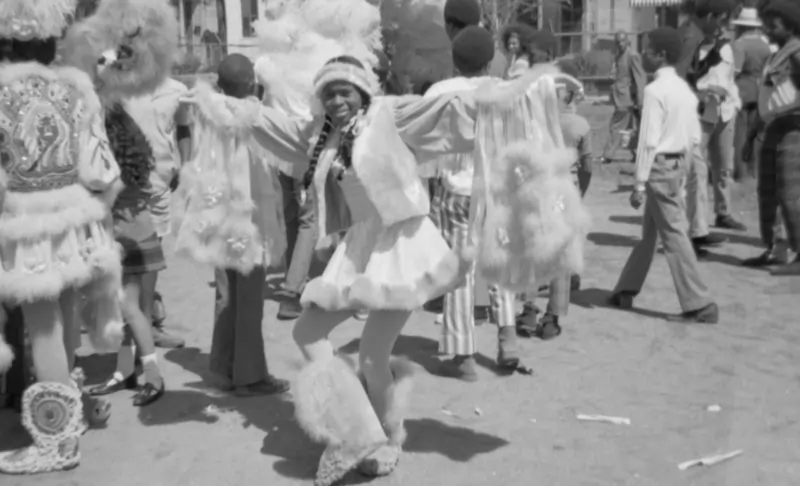
Newly published archival collection on early 1970s New Orleans Mardi Gras Indians provides access to digitized field recordings and photographs
Tulane University Special Collections (TUSC) is pleased to announce the publication of the David Elliott Draper collection on Mardi Gras Indians is now open for public research. The finding aid is available online, and a companion digital collection, Recordings and Photographs from the David Elliott Draper Collection on Mardi Gras Indians, can be accessed at libguides.tulane.edu/DigitalCollections/MardiGrasIndians-1970s.
The archival collection contains audio reel-to-reel and cassette tapes, photographic negatives, research notes, annotated drafts, and related materials compiled by David Elliott Draper for his 1973 Tulane University Ph.D. dissertation, The Mardi Gras Indians: The Ethnomusicology of Black Associations in New Orleans. Draper’s research documents members of several Mardi Gras Indian tribes during the early 1970s, including the Black Eagles, Golden Arrows, Golden Eagles, and Wild Magnolias. Audio recordings capture Mardi Gras Indian practices and gatherings across New Orleans, including locations such as the intersection of Second and Dryades Streets in Central City, as well as events such as St. Joseph’s Night and the 1971 New Orleans Jazz & Heritage Festival.
The collection, donated to TUSC in 2024 by Draper’s family, required significant preservation and processing work upon arrival. Due to its condition, including the presence of mold, the materials underwent stabilization, rehousing, and digitization to ensure long-term preservation and safe access.
The newly launched digital collection provides online access to digitized audio, photographic, and related materials, expanding access for researchers, community members, and the public.
In keeping with TUSC’s approach to responsible stewardship, the collection is presented with recognition that Mardi Gras Indian and Black Masking Indian traditions are living cultural practices shaped and sustained by the communities who carry them. While the materials are preserved and made accessible by TUSC, cultural authority remains with the tribes and individuals represented. TUSC welcomes ongoing community input to help ensure that description, access, and use of the materials remain accurate and respectful.
For more information:
Contact Tulane University Special Collections at specialcollections@tulane.edu, visit the TUSC website at library.tulane.edu/tusc, and follow TUSC on Facebook and Instagram.
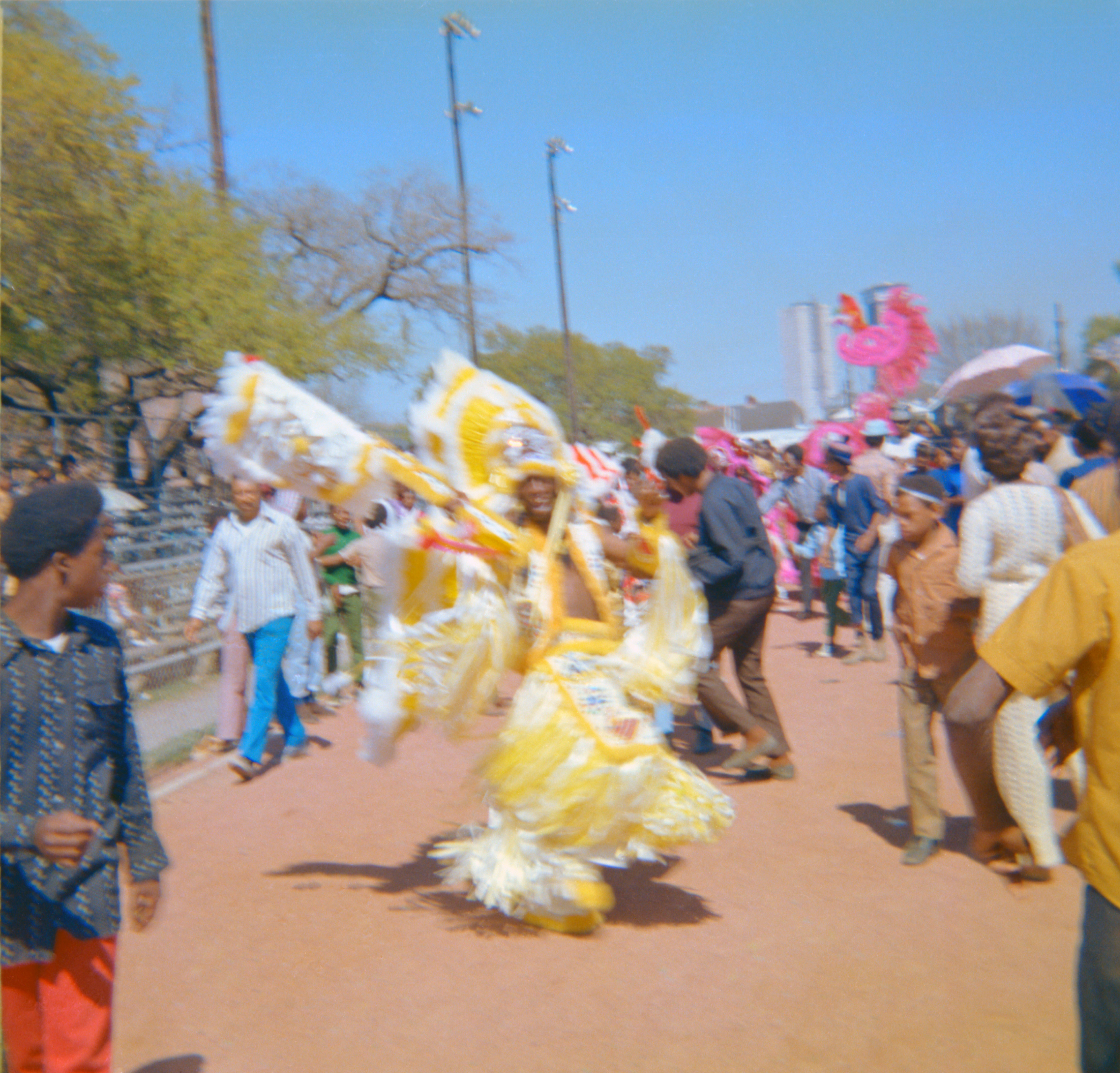
Header photo caption: Photograph of an unidentified Mardi Gras Indian with community members, circa early 1970s, New Orleans, David Elliott Draper collection on Mardi Gras Indians, HJA-113, Tulane University Special Collections.