Preserving a Legacy: Three Tulane Students Help Bring Professor Brumfield's Photographic Archive Online
Published
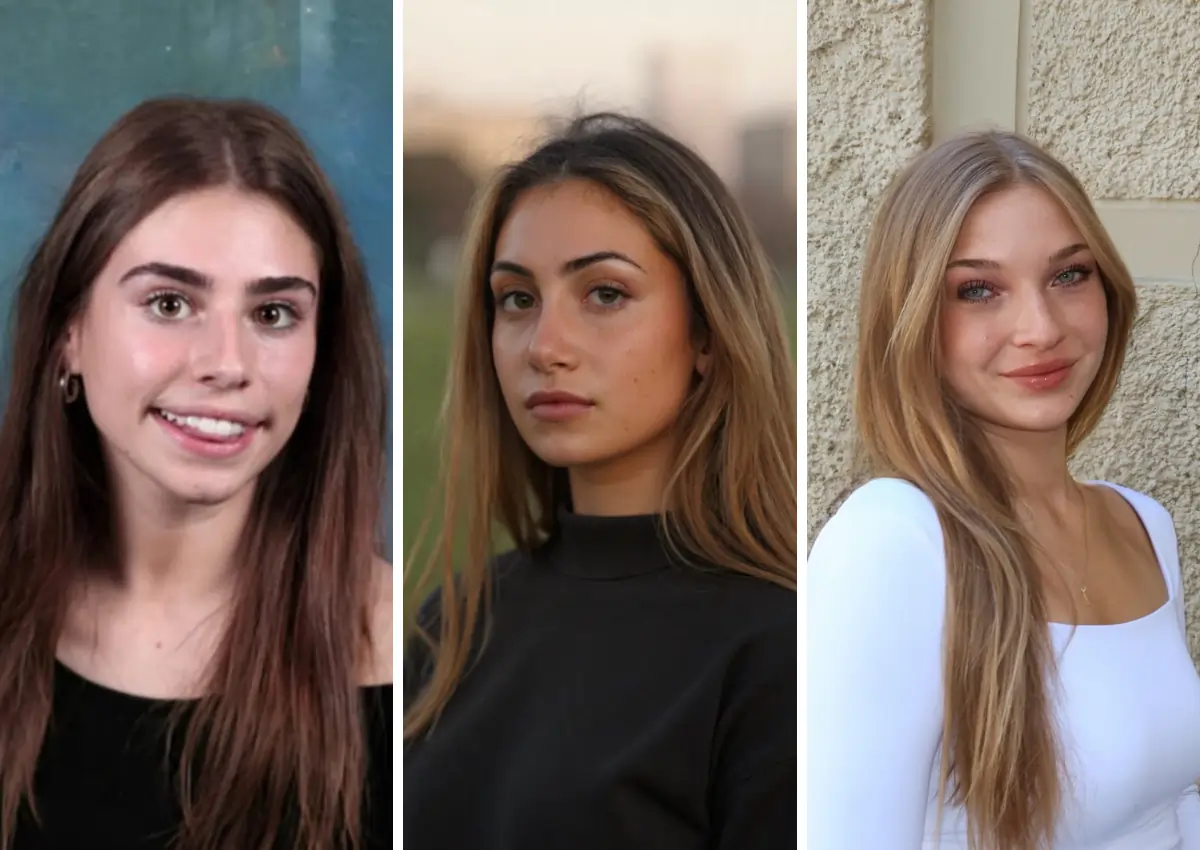
Image Caption: Student Project Team (Left to Right) — Sophia Clements, Sasha Karasik, and Nika Kirsanova, developers of the project websites.
By Becky Gipson
For more than five decades, William Craft Brumfield has been documenting the built world of Russia with a camera and an unwavering sense of mission. A professor of Slavic studies at Tulane University and one of the foremost American historians of Russian architecture, Brumfield has traveled to hundreds of cities, towns, and remote villages, photographing everything from medieval Orthodox churches to grand Soviet-era civic buildings. The resulting archive runs to tens of thousands of images, a visual record of a country's architectural soul, much of it under threat from neglect, redevelopment, or time itself.
Now, thanks to the work of three Tulane undergraduates, that archive is becoming something the public can explore. Sophia Clements, Nika Kirsanova, and Sasha Karasik have each taken on the painstaking work of organizing, captioning, and publishing portions of Brumfield's collection through a suite of WordPress websites hosted under the Tulane WordPress Network. Each project is a mentored independent study at Tulane University. Together, they have helped launch sites covering topics as varied as modernist Soviet architecture, Russian icon screens, Soviet Russian architectural history, and Jewish cultural sites in Russia.
Sophia Clements: From the Classroom to the Archive
Sophia Clements, a freshman double-majoring in Homeland Security and Russian Studies, first encountered Professor Brumfield in the fall of 2025 in his course "Holocaust and the Soviet War Front." When he mentioned offhandedly that he was looking for students to assist with a project, she approached him after class. What followed was a crash course in digital archival practice, and in the hidden enormity of what Brumfield has spent his career building.
"Only once I began my work did I slowly start to understand how extensive his photograph collection is," Clements has said. Her first completed site, Modernism in Soviet Architecture, was followed by a second ongoing project, Russian Icon Screens.
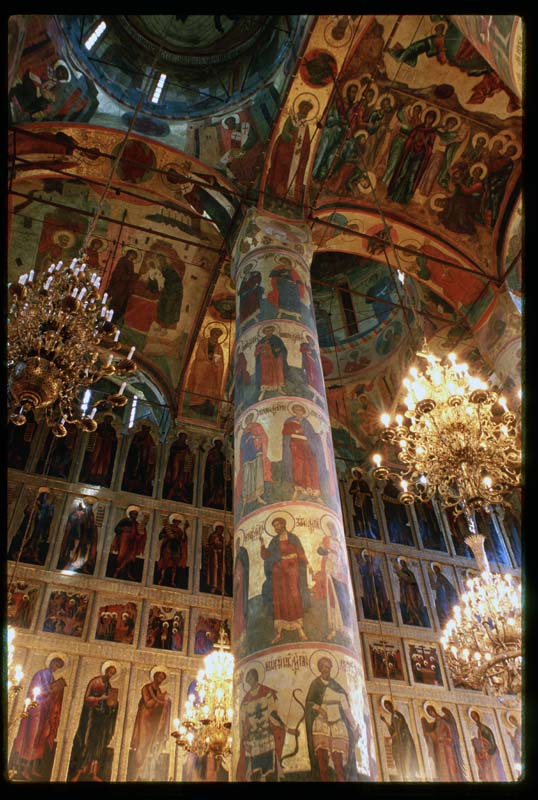 Image Caption: Cathedral of the Dormition, Kremlin (Moscow, Russia) — Interior view facing east, featuring traditional Russian icon screens from Russian Icon Screens website.
The process Clements describes is methodical and multi-layered. Professor Brumfield provides her with a folder of images from a specific Russian town or site. She downloads them into Adobe Bridge to examine the embedded metadata, which forms the basis for each photograph's caption. From there, she organizes the images by building or church, creates individual pages for each structure in WordPress, and builds slideshows of Brumfield's photographs. Then comes a collaborative review: she and Brumfield go through the images together to identify any that need editing, lightening, sharpening, adjusting saturation, to better reveal architectural details. For the icon screens site, she has also drawn on Brumfield's previously published writing to compose contextual text explaining the historical and artistic significance of each screen and its church. "Working on this project has taught me many things," she says: metadata management, website construction, Adobe Bridge, and Photoshop, among them.
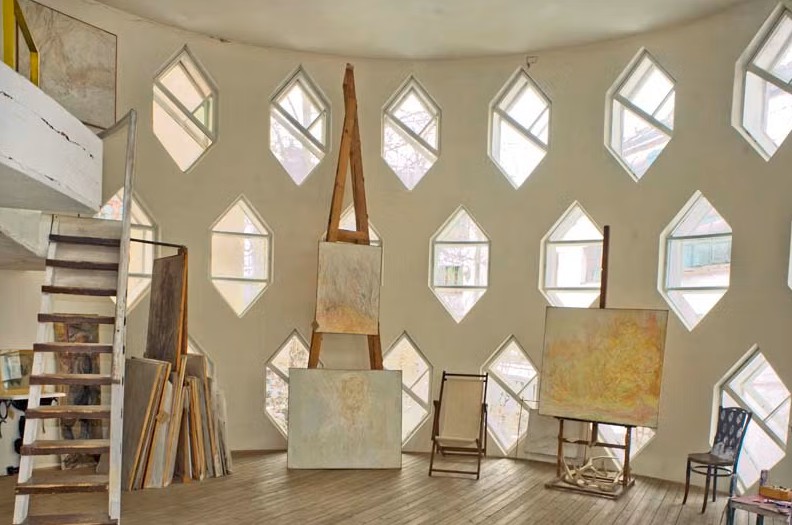
Image Caption: Melnikov House (Moscow, Russia) — Designed by architect K.S. Melnikov and constructed between 1927 and 1929, this residence is a landmark of Soviet modernist architecture from Modernism in Soviet Architecture in Photographs website.
Nika Kirsanova: A Personal Connection to the Material
For Nika Kirsanova, a senior studying Psychology and Exercise Science, the project carries a dimension that goes beyond the academic. Her parents immigrated from St. Petersburg, and growing up with that background gave her an acute sense of how culture, history, and environment shape identity, an awareness that she brought directly to her work on the Soviet Russian Architecture site.
Kirsanova came to the project through Brumfield's Russian language course. "What started as a class quickly turned into something much bigger," she has recalled, "when I learned about the scale of his photographic archive." Her first encounter with the collection was, she says, "honestly a mix of awe and overwhelm." Day-to-day, her work involved sorting, labeling, and uploading images into a structured system, organizing photographs by region and city, ensuring consistent naming conventions, and building galleries designed to be both visually engaging and intuitively navigable for a general audience.
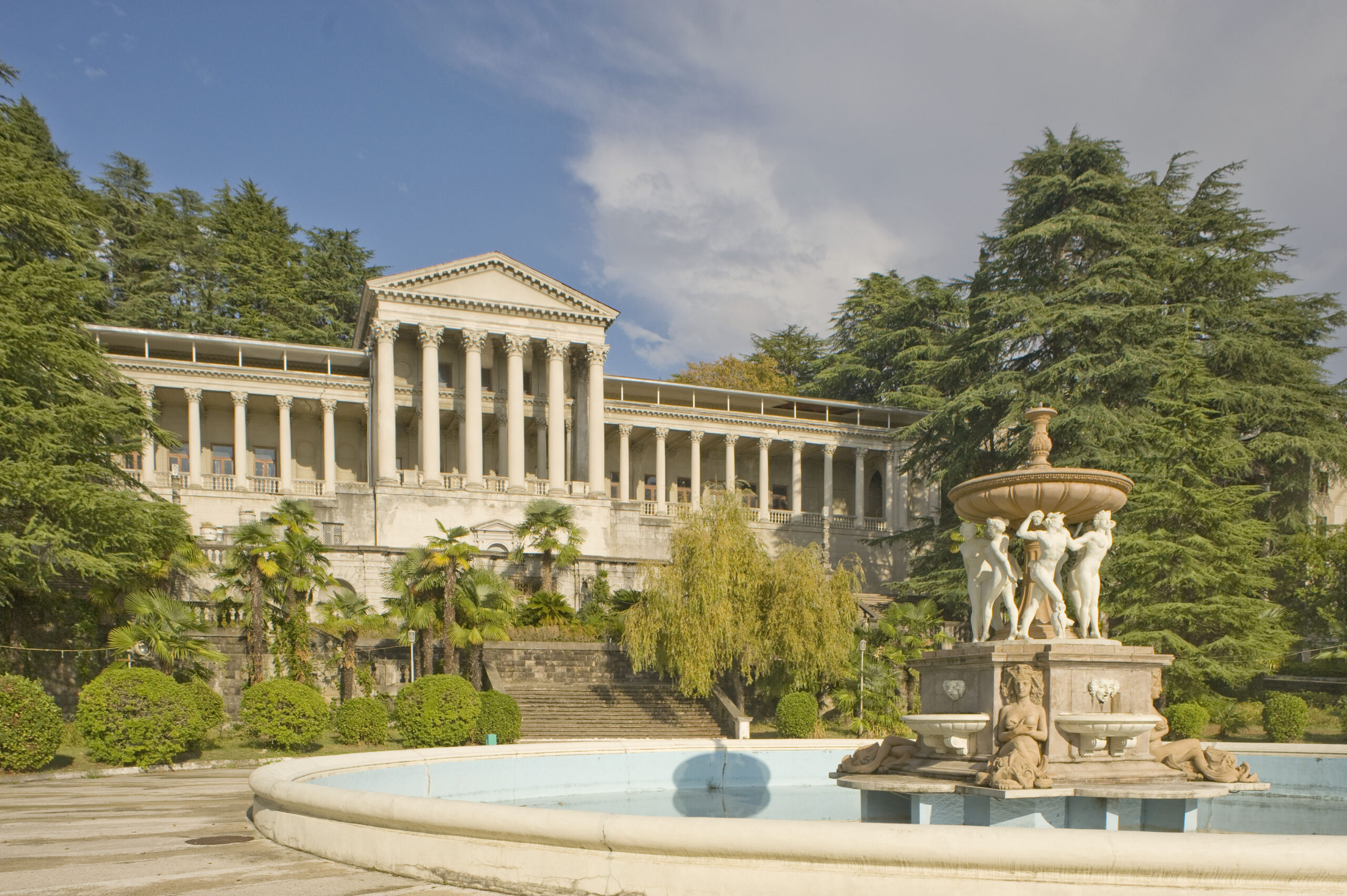
Image caption: S. Ordzhonikidze Sanatorium (Sochi, Russia) — a renowned, Neoclassical Soviet-era resort by Ivan Sergeevich Kuznetsov built in 1937, the fountain in the foreground was built in 1939 from Soviet Russian Architecture 1930-1950’s in Photographs website.
Over time, she developed a fluency in the visual vocabulary of Soviet Russian architecture, recognizing patterns in materials, stylistic periods, and the repetition of certain design elements across geographically distant regions, reflecting the ideological coherence of the Soviet building program. "These patterns help show how architecture can reflect both continuity and change over time," she has observed. The experience also deepened her thinking in unexpected ways: from a psychology standpoint, she found herself reflecting on how physical environments were deliberately designed to shape collective values, and on the personal meaning of engaging with the landscapes that formed the backdrop of her own family's history.
Sasha Karasik: Documenting Jewish Cultural Heritage
Sasha Karasik, a senior majoring in Public Health with a minor in Russian, came to the project through years of coursework with both Professor Brumfield and Professor Lidia Zhigunova, covering everything from the Jewish Soviet Experience and Survey of Russian Art to Tolstoy and Dostoevsky. Originally from Brooklyn, Karasik grew up with Russian language and culture as a constant presence, her parents having also immigrated from Eastern Europe. When the opportunity arose to work with Brumfield's archive, the decision was easy.
The first encounter with the collection made the scale immediately clear. "My first impression was honestly just, wow, that is a lot of massive TIF files," Karasik recalls. The work involved sorting through Brumfield's organized but enormous image folders, selecting representative photographs for each site, converting files to web-ready formats in Adobe Bridge, and building out pages in WordPress using DIVI modules and HTML. Deep research on Yandex helped verify historical details for sites not always well-documented in English. Karasik and Brumfield met three to four times a week, and because Karasik was simultaneously enrolled in his course, the project and the seminars fed into each other constantly.
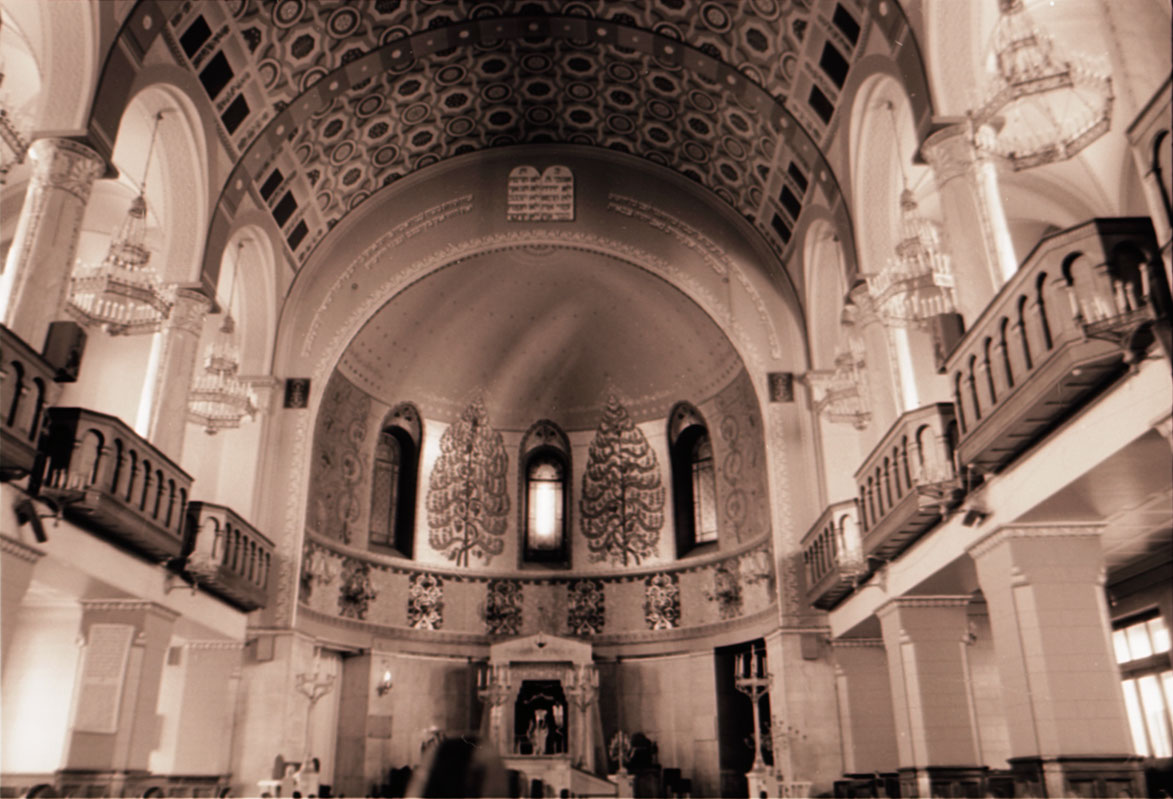
Image Caption: Moscow Choral Synagogue (Moscow, Russia) — Built between 1886 and 1891, this historic synagogue was the only one permitted to operate during the Soviet era and features distinctive Lebanese cedar mosaics from Sites of Jewish Culture and Memory in Russia website.
Brumfield's insistence on accuracy, precise dates, correct historical context, the exact story behind each site, shaped everything. Many of the Jewish cultural sites he photographed have since deteriorated or changed, making the archive all the more irreplaceable. Karasik's goal was to build a platform worthy of that material: academically rigorous and carefully sourced, but visually compelling enough to draw in a visitor with no prior background in Russian Jewish history. The site, which now spans numerous cities across Russia, remains a living project, still growing, and still a collaboration.
The Infrastructure Behind the Archive: Support from the ILC
None of this work happens in isolation. Behind each of these student-built sites is a layer of technical support provided by Tulane's Innovative Learning Center (ILC) located in the Howard-Tilton Memorial Library. Bobbie Garner-Coffie, the ILC's Instructional Technology Manager, has been instrumental in getting students set up and working effectively from the start, guiding them through the process of requesting and registering a WordPress site, orienting them to the platform's features, and teaching the web content best practices that make the archives genuinely usable: proper image sizing, alt text for accessibility, gallery configuration, menu structure, and more.
"The ILC partners on projects like this throughout the year to provide the technical guidance, instructional support, and creative collaboration needed to bring academic, research, and similar archival initiatives to life," Garner-Coffie explains. As Professor Brumfield noted, “That technical foundation is essential for allowing students like Clements, Kirsanova, and Karasik to focus on the intellectual and curatorial work of the archive itself. These projects empower the students to step forward on a global stage.”
An Archive Worth Knowing
The websites these students have built represent only portions of a project that continues to grow. Beyond the Russian architecture sites, Brumfield's broader body of photographic work, including his reflections on American vernacular architecture available through the Lost America site, reflects a career-long commitment to photography as a tool of historical preservation.
What unites all of these projects is a recognition that photographs are not merely illustrations. They are primary sources. For places that have since been demolished, drastically altered, or simply forgotten, Brumfield's images may be the most complete record that survives. Making them searchable, captioned, and publicly accessible transforms them from a private archive into a shared resource for historians, architects, students, and anyone drawn to the enduring question of how people build their world.
As Kirsanova put it: "It's not just a collection of photographs; it's a visual record of cultural and architectural history spanning decades. There's something powerful about how the archive preserves places that many people may never see in person but can still connect with through these images."
You can also view the William C. Brumfield Photographs of Russian Architecture digital collection on Tulane Libraries’ website.