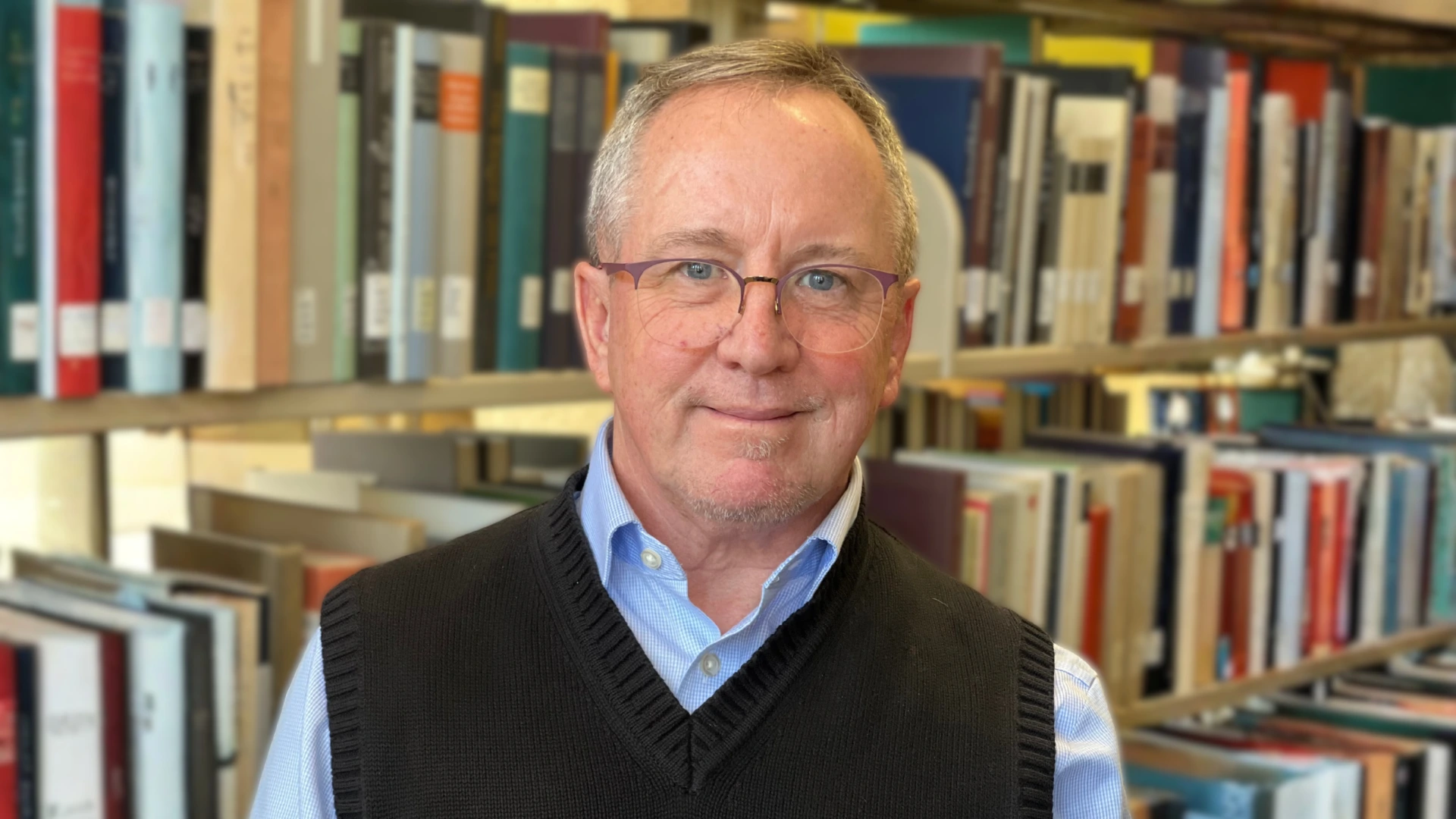
A Tulane Professor, a Poet's Ghost, and the Places That Shaped Russian Literature
Published

Photo caption: Russian Ambassador Alexander Darchiev and Dr. William Brumfield together on stage at the Russian Embassy during “A Creative Evening with Professor William Brumfield,” commemorating the 227th birthday of Alexander Sergeyevich Pushkin
William Brumfield Commemorates Pushkin's 227th Birthday with Photographs and Readings at the Russian Embassy in Washington
By Becky Gipson
On the evening of June 5, 2026, guests gathered at the Russian Embassy in Washington, D.C., for a creative evening unlike most diplomatic events. There were no policy statements or formal declarations; instead, there were poems, photographs, and the voice of a Louisiana professor conjuring the spirit of Russia's greatest writer.
The occasion was the 227th birthday of Alexander Sergeyevich Pushkin. An anniversary that serves as Russian Language Day, established by the United Nations Educational, Scientific and Cultural Organization (UNESCO) in 2010 as part of the UN's initiative to celebrate multilingualism and cultural diversity. The honoree for the evening was Dr. William Brumfield, professor at Tulane University in New Orleans and one of America's foremost scholars of Russian architectural history.
Who Was Alexander Pushkin?
To understand why an evening like this matters, and why a Tulane professor has spent decades traveling to remote Russian estates with a camera, it helps to understand who Pushkin was.
Alexander Pushkin (1799–1837) is to Russian literature what Shakespeare is to English: the foundational figure, the one from whom everything else flows. He was a poet, novelist, playwright, and short story writer whose work essentially gave the Russian language its modern literary form. His verse novel Eugene Onegin, his drama Boris Godunov, and his narrative poems, such as The Bronze Horseman, are not merely classics; they are cornerstones of Russian cultural identity. As Russian Ambassador Alexander Darchiev put it at the evening's commemoration, "Pushkin left us the modern Russian language, which even smartphone newspeak cannot defeat."
Pushkin died tragically young at 37. He was buried on the grounds of Svyatogorsky Monastery in the Pskov region of northwestern Russia, near his beloved family estate of Mikhailovskoye. Even in death, his geography tells his story.
A Young Man from the Deep South, Captivated by Russia
William Brumfield grew up in the American South, a long way, in every sense, from the birch forests and onion-domed churches of northern Russia. Yet it was Russian literature that first reached him. Immersed in the great works of Tolstoy, Dostoevsky, and others, he found himself drawn not just to Russian literature but to Russia itself, its landscape, its history, its built environment.
He earned his BA from Tulane University in 1966 and was one of the first graduates of Tulane's then-newly established Russian program. He went on to complete an MA and then a Ph.D. in Slavic Studies at the University of California, Berkeley. In 1970, he arrived in the Soviet Union for the first time as a graduate student, beginning a lifetime of architectural fieldwork and photography that would eventually take him to some of the most remote corners of the Russian north.
It was Pushkin, above all, who shaped his command of the Russian language. At the embassy gathering, Brumfield told his audience: "In Russia, they ask me: where did you get such a command of the language, who taught you? Who? Pushkin! Pushkin is my teacher. And I am absolutely serious about this."
For Brumfield, reading Pushkin was not merely an academic exercise. It was linguistic immersion of the highest order, contact with Russian at its clearest and most precise.
The Photographs: Following Pushkin Across Russia
In addition to Brumfield’s declamation of four Pushkin poems, the evening featured a slideshow of his photographs taken over decades of travel to the places where Pushkin lived, wrote, and was finally laid to rest. The photographs gave the evening its particular power, grounding Pushkin's biography in specific, physical places that Brumfield had visited and documented with his camera.
Among the images shown were two that speak directly to Pushkin's life as a writer.

Mikhailovskoye, the Pushkin family estate in the Pskov region, was photographed by Brumfield in August 1988. It was at Mikhailovskoye that Pushkin spent two years of internal exile between 1824 and 1826, isolated from St. Petersburg society but extraordinarily productive. There, cut off from the capital and watched over by tsarist authorities, he completed much of Boris Godunov and continued Eugene Onegin. The estate, with its modest manor house, its park, and its proximity to the Sorot River, became one of the defining landscapes of his imagination.
During his first visit to Mikhaylovskoye in 1817, Pushkin met and spoke with his great-uncle, Pyotr Abramovich Gannibal, one of the sons of Abram Petrovich Gannibal, Pushkin’s maternal great-grandfather. The elder Gannibal was a remarkable figure born in central Africa, brought to Istanbul as an enslaved person, bought by Peter the Great, and freed in the service of the Tsar. He would eventually rise to the rank of major general in the military engineers – a fate that fascinated Pushkin and served as a basis for one of his prose works.

Boldino, an estate in the Nizhny Novgorod region, was photographed by Brumfield in September 2007. Boldino is associated with what literary scholars call the "Boldino Autumn" of 1830, where Pushkin was forced to stay during a cholera epidemic in Moscow and — in roughly three months of isolation — produced one of the most astonishing bursts of creative output in literary history: the completion of Eugene Onegin, the four Little Tragedies, The Tales of Belkin, and dozens of poems. Brumfield's photograph of the Boldino manor house captures the quiet, provincial setting that somehow gave rise to this extraordinary literary flowering.
And then there was the grave. Brumfield photographed Pushkin's tomb at Svyatogorsky Monastery in 1988, the same summer he visited Mikhailovskoye. The grave sits on a hillside at the monastery, a white stone tomb that draws Russians by the thousands. For Brumfield, photographing it was an act of homage to the man he credits as his Russian language teacher.

A Day That Began at a Statue
The June 5th commemoration had actually begun earlier that day, in the morning, at the statue of Pushkin on the campus of George Washington University, a public gathering to mark the poet's birthday in the open air of the American capital. Brumfield's evening presentation at the Russian Embassy was the day's culmination: a more intimate, scholarly event in which his photographs and readings from Pushkin's work brought the day's theme into sharp focus.
Ambassador Darchiev welcomed Brumfield warmly, acknowledging both the political difficulty of the moment, "a difficult time for relations between our countries, the time of the Cold War, which, unfortunately, has returned" — and the importance of cultural bridges that endure across political friction. The ambassador praised Brumfield for having "devoted his entire life to Russian culture, capturing for future generations unique architectural monuments, some of which, alas, no longer exist."
Darchiev also noted something remarkable about Brumfield's Russian: that it meets what he called "the Pushkin standard,” a high compliment in a culture that treats its greatest poet as the very measure of the language.

A Career Built on Bearing Witness
Brumfield's connection to Pushkin's Russia is part of a much larger life's work. He has spent the equivalent of fifteen years living and traveling in Russia and the former Soviet Union, photographing vernacular architecture, wooden churches, crumbling manor houses, and Soviet-era avant-garde buildings, often in regions so remote they are connected to the rest of civilization by little more than unpaved tracks.
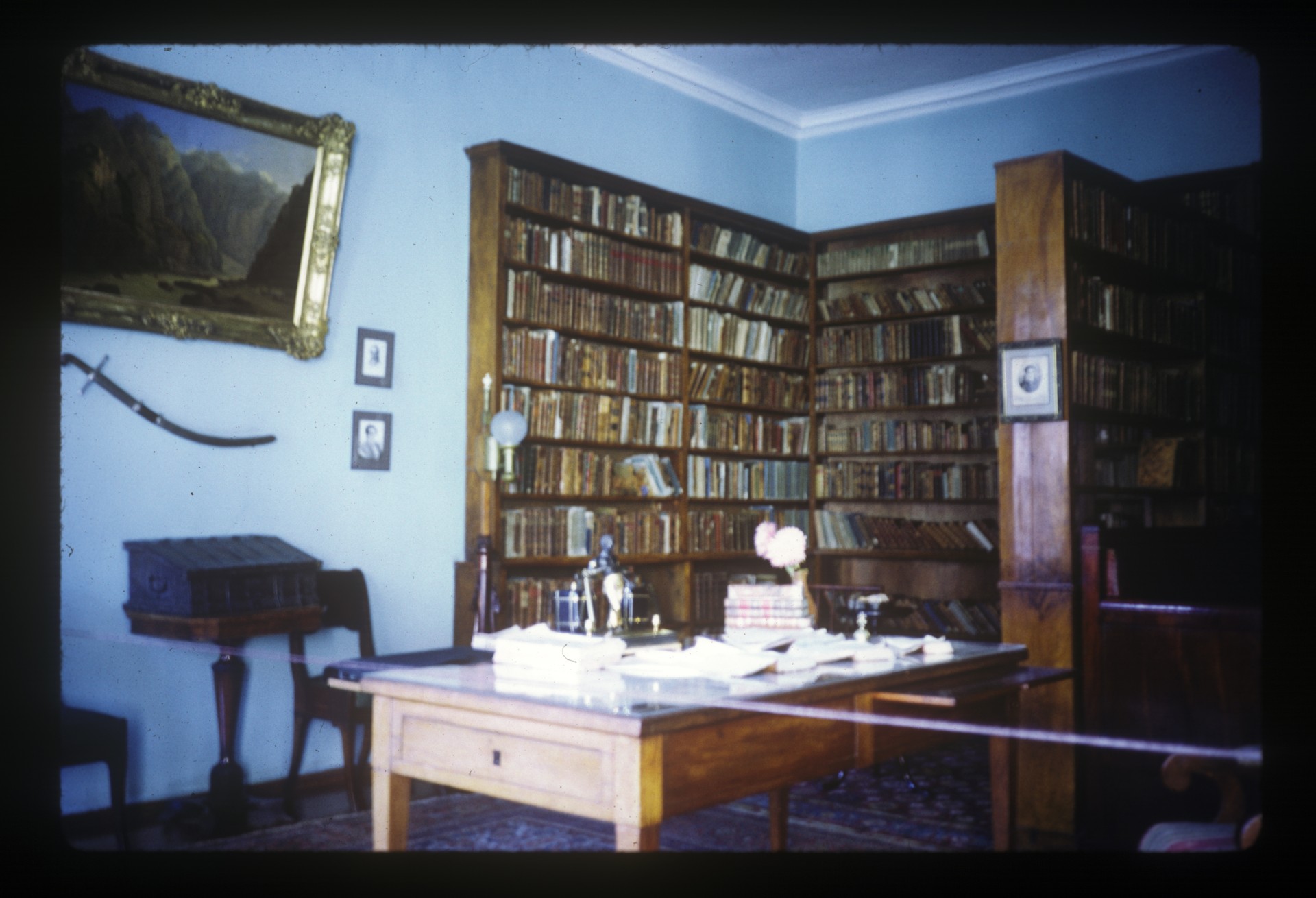
Remarkably, one of the earliest photographs William Brumfield took as a graduate student studying abroad from Berkeley in September 1971 was of Pushkin’s study in St. Petersburg. The site holds particular historical significance, as it was there that Alexander Pushkin spent his final days and ultimately died after being fatally wounded in a duel on February 10, 1837.
His photographic archive is staggering in scope: 12,500 black-and-white prints, 40,000 negatives, and over 148,000 digital files, the bulk of which are now held at the National Gallery of Art in Washington. His books, among them A History of Russian Architecture (a New York Times Notable Book of 1993), Lost Russia, and Architecture at the End of the Earth, have made Russian architectural heritage accessible to English-speaking readers for four decades.
In 2000 he was named a Guggenheim Fellow. He has been a full member of the Russian Academy of Architecture and Construction Sciences since 2002 and an honorary fellow of the Russian Academy of the Arts since 2006. In 2014, the D.S. Likhachev Foundation awarded him its prize for outstanding contributions to the preservation of Russia's historic and cultural heritage. In 2019, he received the Order of Friendship from the Russian government.
The Thread That Runs Through Everything
What makes Brumfield's evening at the Russian Embassy something more than a scholarly presentation is the personal thread that runs beneath it. This is a man who came to Russia through its literature, who learned the language from its greatest poet, and who then spent his career photographing the physical world that literature grew out of: the estates, the landscapes, and the churches.
When Brumfield showed his photograph of Mikhailovskoye's manor house, taken in that August of 1988, three years before the Soviet Union fell, he was showing the place where a young poet in exile sat and wrote the lines that would eventually teach a young American from the South what Russian could sound and feel like.
It is a remarkable loop of influence, stretching across two centuries and two continents, and it was quietly present in every image on that screen.
William Brumfield is a professor at Tulane University in New Orleans. His photographs and publications on Russian architecture and culture span more than fifty years of fieldwork. His most recent book, From Forest to Steppe: The Russian Art of Building in Wood, was published by Duke University Press in 2025.
You can also view the William C. Brumfield Photographs of Russian Architecture digital collection on Tulane Libraries’ website.