Understanding Archives: Linear Feet Explained
Published
Written by Kure Croker
If you've seen phrases like "15 linear feet" in a finding aid, you might have scratched your head, wondering what that actually means. In this brief explainer, we will clarify what a linear foot is and why we use it to describe the size of our collections.
What is Linear Foot?
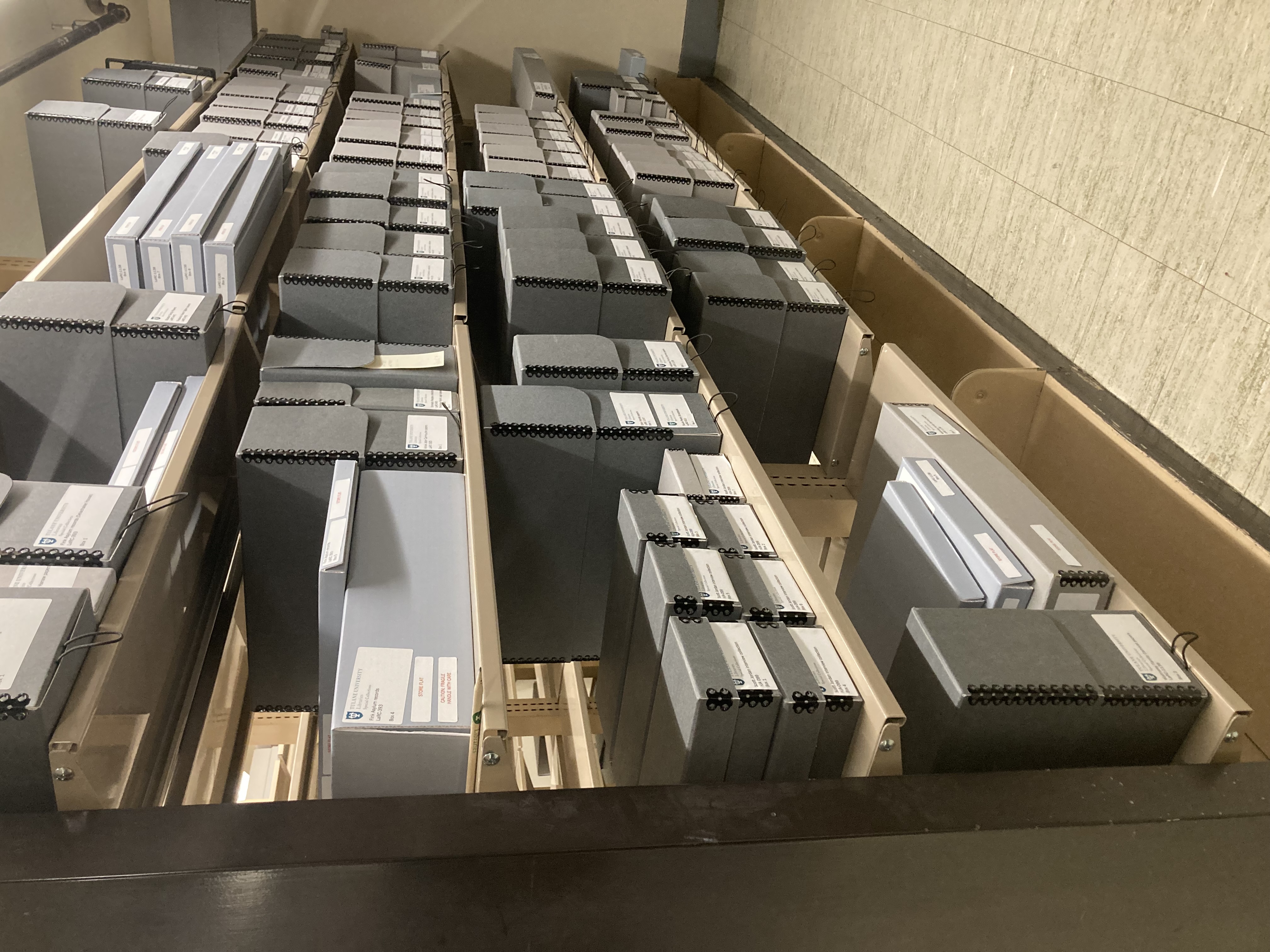
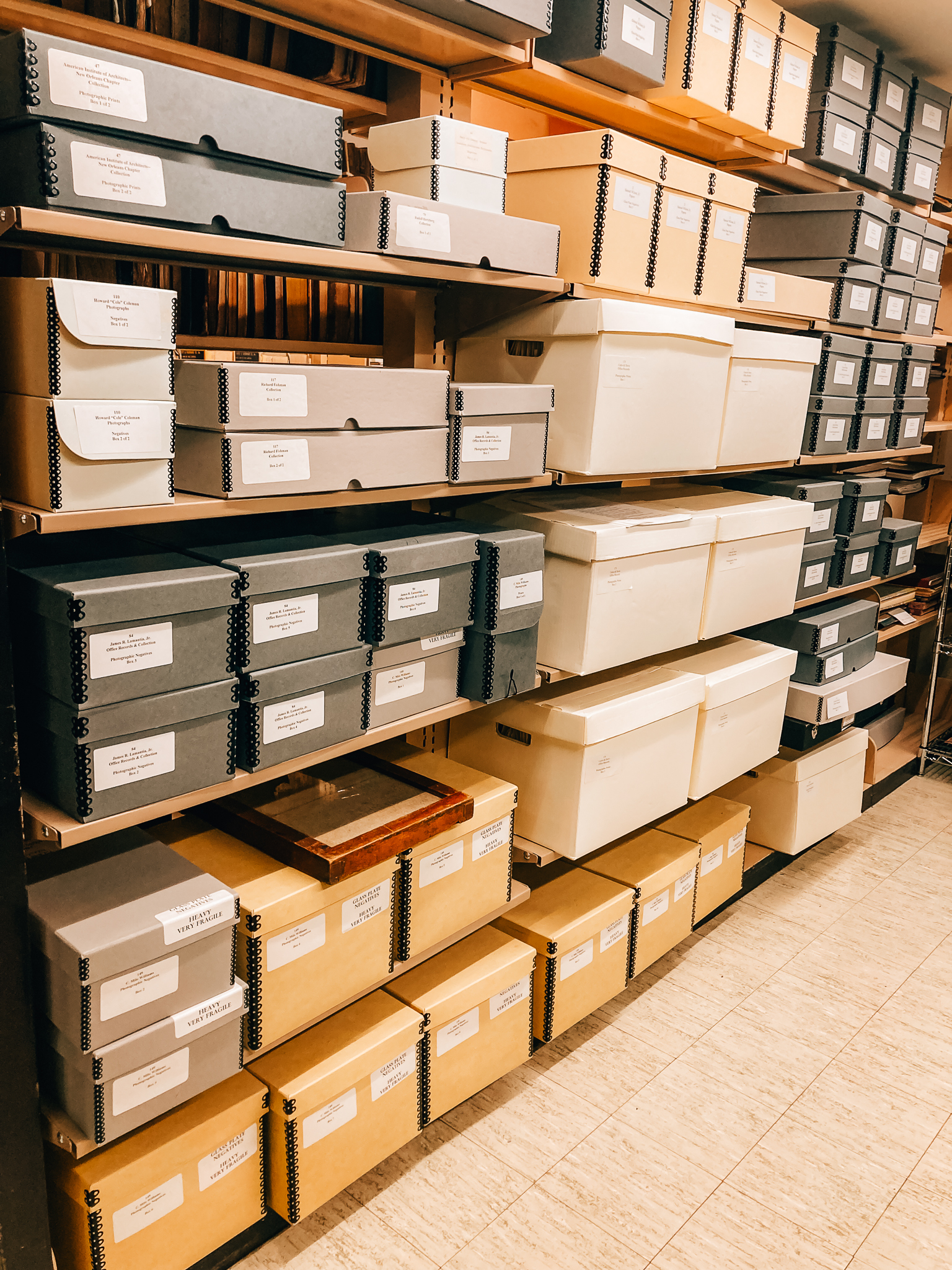
A linear foot is the standard measurement of linear inches used by archivists to describe the amount of shelf space a collection occupies. Think of it simply: if you lined up all the boxes or folders in an archival collection side by side on a shelf, how many feet of shelf space would they occupy? That's your linear feet measurement.
For example, if you have ten archival record cartons, each 12 inches wide, and a foot is 12 inches long, you have 10 linear feet of material. Easy, right? More universally, think of that overcrammed bookcase in your home… how many books can you fit on a shelf? (How many books should you fit on those shelves?) This is an ordinary way we all estimate linear footage in our day-to-day lives.
Linear foot measurements tell you nothing about the height or depth of the materials on the shelf, only the horizontal space they occupy. If you were to measure the total volume (width, height, and depth) of a collection, you would be using cubic feet, not linear feet.
Why Does This Matter?
Understanding linear feet helps you grasp the scope of a collection at a glance. A collection of 2 linear feet might be manageable to review in an afternoon, while 200 linear feet could represent months of research. It's a practical measurement that, once understood, helps researchers, archivists, and administrators plan their work and manage collections.
Another reason archivists use linear feet is that archives are not catalogued in the same way as books. Books have a 1-to-1 catalogue record for each individual title that a library holds. You can say, "Howard-Tilton Memorial Library holds over 4 million print volumes!" and easily picture shelf after shelf of separate books. In contrast, archival collections are described and catalogued in a one-to-many relationship. We catalog our collections using finding aids that describe the top-down arrangement of items in groups of boxes, folders, and files, organized under the collection's title. Try picturing TUSC's approximately 53,000 linear feet of archives containing millions of individual papers, photographs, LPs, objects, and more! It's a shift in perspective, but hopefully it is now easier to understand.
So next time you see "linear feet" in a finding aid, you'll know exactly what it means: shelf space, measured one foot at a time.