Weeding Across the Disciplines: Tulane Libraries Staff Share Insights at LUC 2026
Published
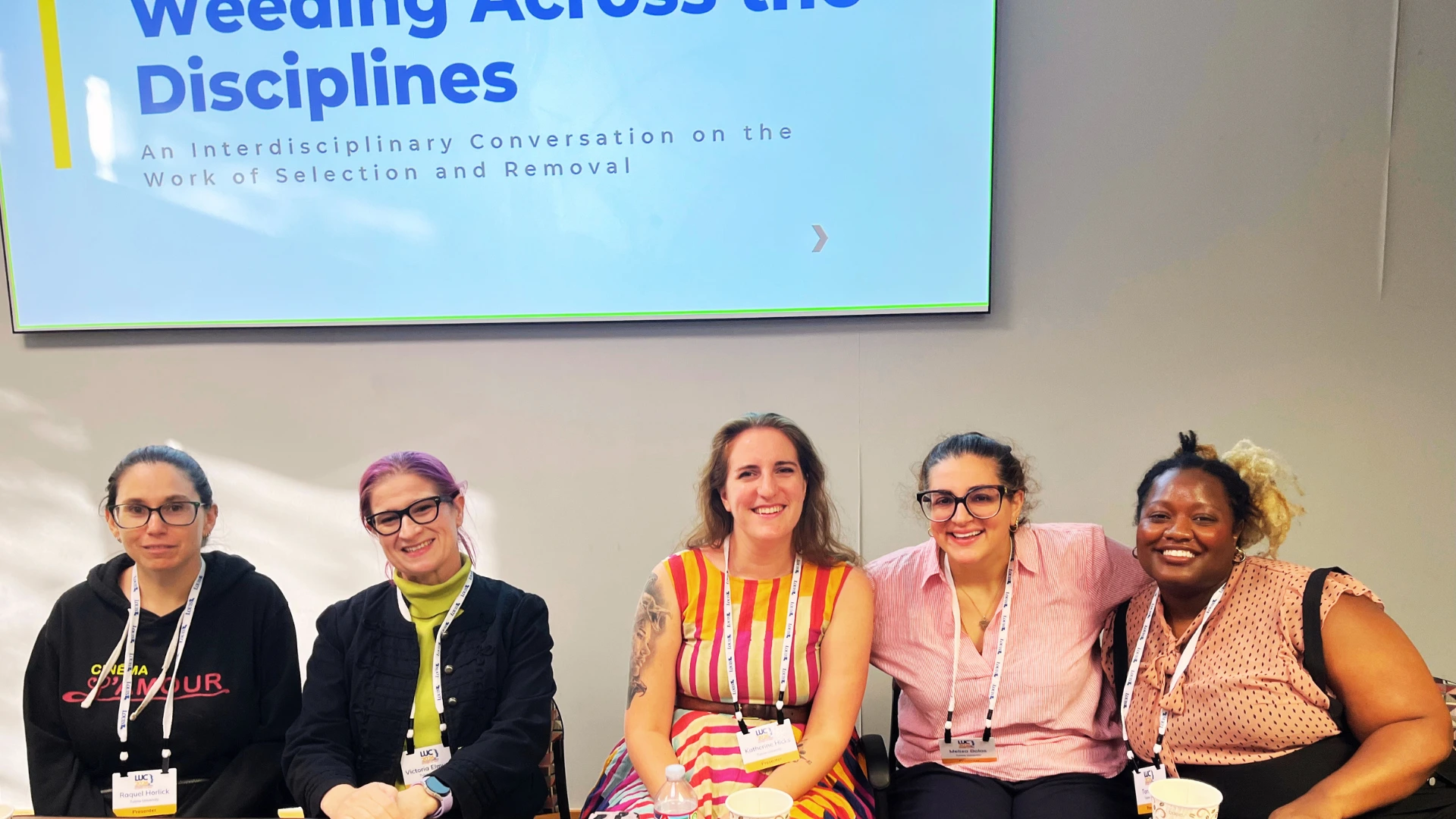
Each October, librarians from across Louisiana gather for the LOUIS Users Conference (LUC), hosted by the Louisiana Library Network, known as LOUIS, which is funded by the Board of Regents. This year, a panel from our own Tulane libraries took the stage with a topic that touches every collection: weeding.
A statewide gathering
LOUIS gives member libraries deep discounts on databases, and its annual conference, held the first week of October, brings together librarians from research universities like Tulane and LSU, technical colleges, and community colleges like Delgado. For Victoria Elmwood, Scholarly Engagement Humanities Librarian, the event is also a chance to reconnect with colleagues from past LOUIS-administered projects, including a large Open Educational Resources grant that produced dual enrollment course materials for high school students. Vendors attend too, and the relaxed setting allows for the kind of unhurried, productive conversations that are hard to come by at larger conferences.
Four disciplines, one challenge
Elmwood organized and presented on the panel, “Weeding Across the Disciplines,” which looked at how subject area shapes the way librarians remove materials from the collection. It was her first time organizing a panel, and her goal was to give a variety of colleagues a public space to discuss their work with peers.
Raquel Horlick, Scholarly Engagement Science and Engineering Librarian, explained that the sciences lend themselves to a rule-bound approach to weeding. Elmwood described a modified version of that approach for the humanities, one that is more labor-intensive because decisions are made title by title and must account for foreign-language materials. Melisa Balos, Scholarly Engagement Social Sciences Librarian, spoke about the importance of retaining certain materials so they don’t disappear from the historical record. Katherine Hicks, Scholarly Engagement Arts and Humanities Librarian, addressed items that must stay on site and oversized materials, noting that primary sources in the arts rarely become obsolete.
The work after the decision
A highlight of the panel was the participation of Toni Wells, Operations Manager, Collections Management, who attended her first library conference. Wells walked the audience through what happens after librarians make their selections: moving books, updating records, and the logistics handled in the annex. Her insights drew particular interest from the dean of the library at Nicholls State University, Wells’s alma mater, who shared that her library is preparing for a large weeding project of its own.
Regardless of the size or scope of a library, the cyclical work of maintaining its collection’s relevance and currency is a common connecting thread.
Supporting staff growth
Wells attended both days of the conference and called it a valuable experience. Elmwood hopes the panel encourages others to help staff take advantage of the support Tulane libraries provides for professional development.